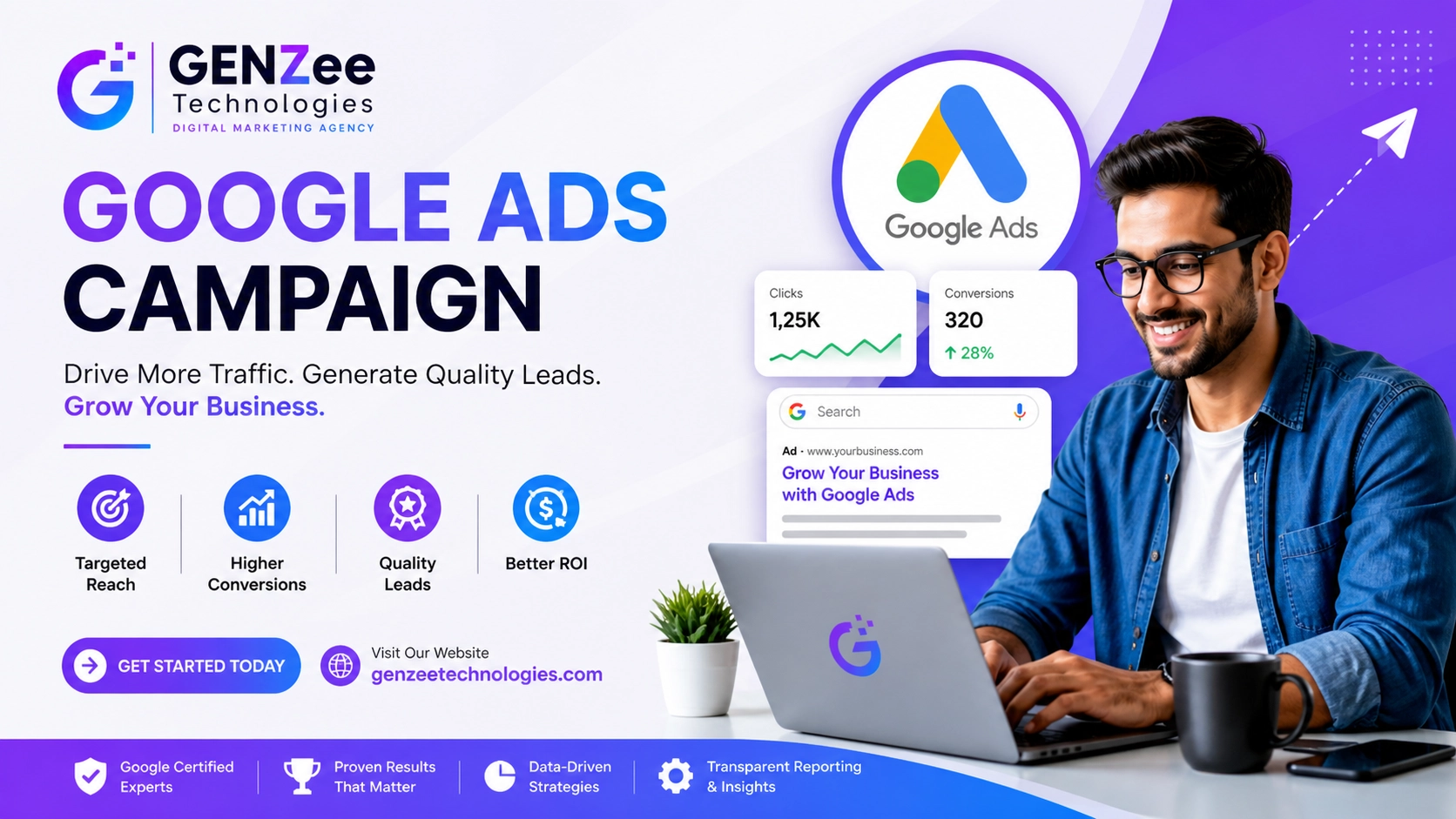
In today’s competitive digital landscape, running a successful Google Ads Campaign is no longer optional—it’s essential for businesses that want to generate leads, drive sales, and scale fast. With billions of daily searches happening on Google, advertisers have a powerful opportunity to connect with users who are actively searching for products or services.
However, the platform has evolved significantly in recent years. With AI-driven automation, new campaign types, and advanced targeting, businesses must adopt smarter strategies to stay ahead. In this comprehensive guide, we’ll explore how to create, manage, and optimize a high-performing Google Ads campaign while aligning with the latest updates.
What is a Google Ads Campaign?
A Google Ads campaign is a structured advertising setup within Google’s advertising platform that allows businesses to promote products or services across search results, websites, YouTube, and apps. These campaigns are built around specific goals such as:
- Lead generation
- Website traffic
- Brand awareness
- Sales conversions
The real power of Google Ads lies in intent-based targeting—you reach users exactly when they are searching for something relevant to your business.
Types of Google Ads Campaigns
Understanding campaign types is crucial for building a strong advertising strategy.
1. Search Campaigns
These are text-based ads that appear on Google search results. They are best for capturing high-intent users ready to convert.
2. Display Campaigns
Display ads are visual banners shown across millions of websites in the Google Display Network. Ideal for brand awareness and remarketing.
3. Performance Max Campaigns
Performance Max (PMax) uses AI to run ads across all Google channels (Search, Display, YouTube, Gmail, Discover) from a single campaign.
4. Demand Gen Campaigns
These campaigns focus on generating interest and awareness using visually engaging ads across YouTube and Google feeds.
5. Shopping Campaigns
Perfect for eCommerce businesses, showcasing products with images, pricing, and reviews directly in search results.
Latest Google Ads Updates You Must Know
Google Ads is rapidly evolving with AI and automation at its core. According to official Google updates:
- AI-powered tools like Performance Max and AI Max are transforming campaign optimization.
- Ads are now appearing in AI-powered search experiences, including AI Overviews.
- Smart bidding strategies are improving ROI through automated decision-making.
- The “Power Pack” approach combines Demand Gen, AI Max, and Performance Max for full-funnel marketing.
👉 Official Google resource:
These updates highlight a major shift: automation + AI = better performance.
How to Create a High-Performing Google Ads Campaign
Step 1: Define Clear Goals
Before launching your campaign, identify what success looks like:
- Leads?
- Sales?
- Website traffic?
Your goal will determine your campaign type and bidding strategy.
Step 2: Keyword Research
Keywords are the backbone of any campaign. Focus on:
- High-intent keywords
- Long-tail keywords
- Negative keywords (to avoid irrelevant traffic)
Step 3: Create Compelling Ads
Your ad copy should:
- Address user pain points
- Include a strong call-to-action (CTA)
- Highlight unique selling points
Step 4: Optimize Landing Pages
Even the best ads fail without a high-converting landing page. Ensure:
- Fast loading speed
- Mobile responsiveness
- Clear CTA
Step 5: Set Budget & Bidding Strategy
Choose from:
- Manual CPC
- Target CPA
- Target ROAS
Smart bidding strategies powered by AI can significantly improve performance.
Google Ads Campaign Optimization Strategies
Launching a campaign is just the beginning. Continuous optimization is key.
1. Monitor Performance Metrics
Track:
- Click-through rate (CTR)
- Conversion rate
- Cost per acquisition (CPA)
2. Use A/B Testing
Test different:
- Headlines
- Descriptions
- Landing pages
3. Leverage Audience Targeting
Use:
- Custom audiences
- Remarketing lists
- Demographics
4. Optimize for Mobile
A large percentage of traffic comes from mobile devices. Ensure your ads and landing pages are mobile-friendly.
5. Utilize AI & Automation
Google’s AI can:
- Adjust bids in real-time
- Predict user behavior
- Optimize ad placements
Campaigns using AI-driven strategies often see improved conversion rates and efficiency.
Common Mistakes to Avoid
Many businesses waste budget due to poor campaign setup. Avoid these mistakes:
- Not using negative keywords
- Ignoring conversion tracking
- Sending traffic to poor landing pages
- Over-relying on automation without strategy
- Not testing different ad variations
Why Businesses Need Professional Google Ads Management
Running ads may seem simple, but achieving consistent ROI requires expertise. This is where professional services come in.
If you want to scale your campaigns effectively, consider expert help like
👉 Google Ads Campaign
👉 Google Ads Management Services
Professional agencies provide:
- Advanced keyword research
- Conversion tracking setup
- Ongoing optimization
- Data-driven strategy
Future of Google Ads Campaigns
The future of Google Ads is heavily driven by AI and automation. Key trends include:
- Increased use of machine learning
- More personalized ad experiences
- Integration with AI-powered search
- Enhanced audience targeting
Google is also experimenting with ads in new AI-driven environments, creating more opportunities for advertisers to reach users in innovative ways.
Final Thoughts
A successful Google Ads campaign is a combination of strategy, data, and continuous optimization. While the platform offers powerful tools, it also requires expertise to fully leverage its potential.
By understanding campaign types, following best practices, and staying updated with Google’s latest innovations, businesses can achieve:
- Higher ROI
- Better lead quality
- Sustainable growth
If you’re serious about scaling your business, investing in a well-structured Google Ads strategy—or partnering with professionals—can make all the difference.